LanguageTable constraints
Table constraints
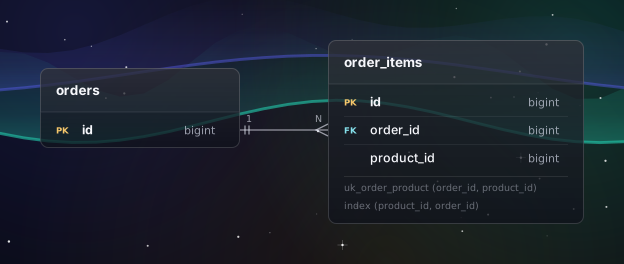
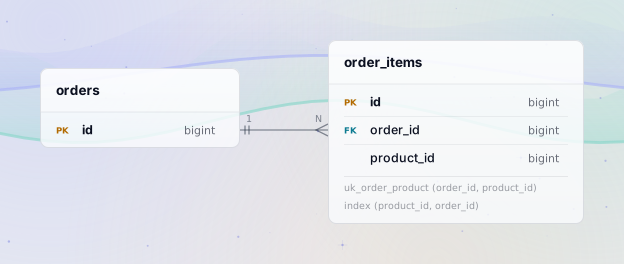
Some facts span several columns. Write them as a line of their own inside the table block.
table orders {
  id  bigint  pk
}

table order_items {
  id          bigint  pk
  order_id    bigint  -> orders
  product_id  bigint
  unique(order_id, product_id) as uk_order_product
  index(product_id, order_id)
}
| Constraint | Meaning |
|---|---|
unique(a, b), unique(a, b) as name |
A composite UNIQUE |
index(a, b), index(a, b) as name |
A composite index |
Every column in the list must exist in the table. For a single column, use the column modifiers uk and index; a constraint over one column is reported as a warning.
A column called index
A constraint starts only when ( follows the keyword directly. So index int is a column named index, while index(a, b) is a constraint:
table jobs {
  id     bigint  pk
  index  int     "Position in the queue"
}
Keywords in resin are never reserved; see Names and comments.